Leadership from a Te Ao Māori Perspective: An invitation to Lead with Empathy

Misty Murray

He tāonga rongonui te aroha ki te tangata 

In early childhood education, leadership is rarely about titles. It lives in our daily interactions, our conversations with colleagues, and the way we care for tamariki, whānau, and each other. Looking at leadership through a Te Ao Māori lens offers powerful guidance for kaiako navigating the complexity, change, and responsibility of ECE. 


This kaupapa invites us to slow down, listen deeply, and lead in ways that honour people above all else. 

Beginning with Breath and Intent 

Leadership from a Māori worldview begins with presence. 
Opening with karakia is not just about ritual — it is about grounding ourselves.

Hā ki roto, hā ki waho 
Breathe in, breathe out. 
Settle the mauri that moves within. 

For kaiako, this is a reminder that how we show up matters. When we take time to centre ourselves, we are better able to respond with calm, kindness, and clarity — especially during the “piki me ngā heke” 
(the ups and downs) of ECE life. 

Through Looking and Listening, We Gain Wisdom 

Nā te whakarongo me te titiro ka puta mai te kōrero 

Through looking and listening, we gain wisdom.


For leaders, this is an invitation to practice empathy. True empathy requires us to suspend judgement- to genuinely see people from their own perspectives. In ECE settings, this can be challenging. 

Teams are diverse, work is busy, and change is constant. 

And yet, empathy is essential. 


Ask yourself: 

  • What assumptions or judgements might I be holding about members of my team? 
  • Who do I find hardest to connect with, and why? 
  • How well do I really know the people I work alongside? 


Leadership that is grounded in empathy creates trust, safety, and belonging. 

Leadership Anchored in Te Ao Māori Values 
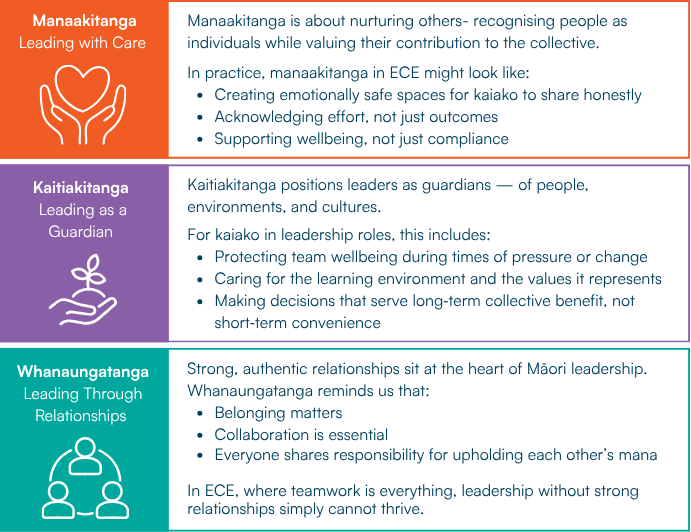
From a Te Ao Māori perspective, leadership is deeply relational and values‑based. Three interwoven concepts guide this approach: 

“He Tangata, He Tangata, He Tangata”

One of the most well‑known Māori whakataukī asks: 


He aha te mea nui o te ao? 
He tangata, he tangata, he tangata. 

What is the most important thing in the world? 

It is people. It is people. It is people. 


Leadership from a Māori lens confirms this truth: people and relationships are central to success. This is where rangatiratanga comes in.  

Rangatiratanga: Leadership as Service

Rangatiratanga is often spoken about in terms of authority or independence, but at its heart sits trusteeship and service. 


Rangatira act in the best interests of their people, holding responsibility not for personal status, but for collective wellbeing and future flourishing. 


As leaders, we might ask: 

  • Am I leading over people, or in service to them? 
  • How do my decisions protect, empower, and uplift my team? 
  • How am I using my influence to enhance the mana of others? 


Leadership isn’t about standing out — it’s about standing in for others.

Leading Change with Empathy 

Change is a constant in early childhood settings — staffing shifts, policy updates, curriculum changes, and evolving community needs. 

From a Te Ao Māori leadership perspective, change should never be imposed without care. 

Empathetic leadership asks: 
  • How can I take my team with me? 
  • Whose voices need to be heard before decisions are made? 
  • What support do people need to feel safe, valued, and capable during change? 

When empathy leads, change becomes something we navigate together. 

A Taonga to Carry Forward 
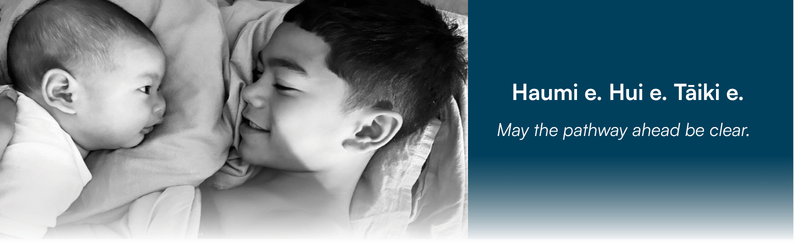
Another whakataukī reminds us: 


He taonga rongonui te aroha ki te tangata 

Goodwill towards others is a precious treasure. 


This goodwill — expressed through manaakitanga, kaitiakitanga, whanaungatanga, and rangatiratanga — is not an “add‑on” to leadership. It is leadership. 


As kaiako, we are invited to lead with heart, humility, and intention. To listen more than we speak. To protect what matters. And to always remember: people come first.